Services to SchoolsExplore this section
- School libraries
- Services to Schools
School libraries
Visit page- Understanding school libraries
- Services to Schools
- School libraries
Understanding school libraries
Visit page- Why school libraries matter
- Purpose of the school library
- The pedagogy of the library
- School library futures
- Importance of the school library in learning — the research
- School Libraries in Aotearoa New Zealand — survey reports
- Services to Schools
- School libraries
- Understanding school libraries
School Libraries in Aotearoa New Zealand — survey reports
Visit page- School libraries in Aotearoa New Zealand — 2023
- School libraries in Aotearoa New Zealand — 2022
- School libraries in Aotearoa New Zealand — 2021
- School libraries in Aotearoa New Zealand — 2019
- School libraries in Aotearoa New Zealand — 2018
- Leading and managing
- Services to Schools
- School libraries
Leading and managing
Visit page- Leading your school library
- Managing your school library
- Services to Schools
- School libraries
- Leading and managing
Managing your school library
Visit page- School library budget
- Annual report
- Evidence-based school library practice
- Services to Schools
- School libraries
- Leading and managing
- Managing your school library
Evidence-based school library practice
Visit page- Evidence-based practice and why it matters
- Planning successful user-centred change
- Gathering evidence from existing research and knowledge
- Gathering your own evidence
- Turning evidence into action
- Journey mapping for school library design
- Touchstone tours — UX tool for your school library
- Managing your school library staff
- School Library Development Framework
- Collections and resources
- Library systems and operations
- Services to Schools
- School libraries
Library systems and operations
Visit page- Your library catalogue
- Record Manager: Cataloguing service for schools
- Library operations
- Services to Schools
- School libraries
- Library systems and operations
Library operations
Visit page- Getting started in your school library — an operations checklist
- School library suppliers list
- Stocktaking guide
- Earthquake, fire, or flood: Impact on school libraries
- Radio-frequency identification (RFID)
- Tips for moving your library
- School library mergers
- Place and environment
- Library services for teaching and learning
- Videos
- Stories
- Services to Schools
- School libraries
Stories
Visit page- One teacher’s journey towards building a class reading culture
- Whare Ahuru Mowai — a future-focused library space
- Positive rewards from creating a school-wide reading culture
- Encouraging reading through generous lending policies
- Student Library Review Group — giving students a voice
- The Poppy Blanket
- Genrefication — one primary school librarian's experience
- Inquiry into inquiry: The Marlborough Inquiry Project
- Supporting inquiry learning in kura kaupapa Māori
- She'll be OK: Growing confident team members
- From information overload to streamlined searching
- Summer reading stories
- Professional development through online learning
- Services to Schools
- School libraries
- Stories
Professional development through online learning
Visit page- Learning about raising readers at Sylvia Park School
- Learning to develop a responsive secondary school library collection
- Learning about raising readers at Oropi School
- Learning to develop a responsive primary school collection
- Experiencing the benefits of facilitated online learning
- Online PD — an 'anchor' during a pandemic
- Projects to improve student learning
- School loans case studies
- Research
- Reading engagement
- Services to Schools
Reading engagement
Visit page- Understanding reading engagement
- Services to Schools
- Reading engagement
Understanding reading engagement
Visit page- Why reading engagement matters
- Reading for pleasure — a door to success
- Reading for hauora | wellbeing
- My reading superhero
- Services to Schools
- Reading engagement
- Understanding reading engagement
My reading superhero
Visit page- Di-Kun — Mrs Dawson, reading superhero
- Eban — my Mum, reading superhero
- Eva — my Mum, reading superhero
- Morgan — my Mum, reading superhero
- Nicole — my Grandpa, reading superhero
- Rochester — Miss Webster, reading superhero
- Sam — my Mum, reading superhero
- Sarah — Miss Pritchard, reading superhero
- Creating a reading community
- Services to Schools
- Reading engagement
Creating a reading community
Visit page- A school reading community
- A school-wide reading culture
- Reading promotion
- Home-school reading partnerships
- Reading at home
- Reading Together® programme
- Collaborating with public libraries
- Organisations, events, and awards celebrating reading
- Libraries supporting readers
- Children's and youth literature
- Services to Schools
- Reading engagement
Children's and youth literature
Visit page- Genres and forms in children's and young adult (YA) fiction
- Non-fiction
- Picture books
- Early chapter books
- Sophisticated picture books
- Books for tweens
- Poetry
- Verse novels
- Graphic novels
- Books in world languages
- Books and Reads — for kids and teens
- Teachers as readers
- Strategies to engage students as readers
- Services to Schools
- Reading engagement
Strategies to engage students as readers
Visit page- Teachers Creating Readers Framework and examples of practice
- Reading aloud
- Independent reading
- Helping students choose books to read for pleasure
- Reluctant readers
- Engaging teens with reading
- Tween readers — keeping them motivated
- Social reading and book clubs
- Summer reading
- Services to Schools
- Reading engagement
Summer reading
Visit page- Take a community approach to summer reading
- Research on the summer slide and summer reading
- Schools — how to support students' summer reading
- Services to Schools
- Reading engagement
- Summer reading
Schools — how to support students' summer reading
Visit page- Plan a summer reading initiative
- Principals — lead summer reading
- Teachers — prepare your students for summer reading
- School libraries — encourage summer reading
- Measuring the impact of summer reading
- Families — keeping your child or teen reading over summer
- Public libraries — encourage summer reading
- Videos
- Research
- Digital literacy
- Lending service
- Services to Schools
Lending service
Visit page- Borrowing from us
- What you can borrow
- Books in our lending collections for schools
- Books for the Better Start Literacy Approach
- Dates to request or return books
- School loan coordinators — how to use our lending service
- Services to Schools
- Lending service
School loan coordinators — how to use our lending service
Visit page- School loan coordinator role
- Quick guide
- Work with teachers to plan your requests for books
- Request books
- Receive and manage your books
- Return your books to us
- Renew books, overdue books, lost or damaged books
- Help with registering, changing coordinator, signing in
- Offers for small schools
- Home educators — how to borrow our books
- Lending news
- Teaching and learning resources
- Services to Schools
Teaching and learning resources
Visit page- Resources for learning
- Services to Schools
- Teaching and learning resources
Resources for learning
Visit page- Resources for teaching Aotearoa NZ histories topics
- Services to Schools
- Teaching and learning resources
- Resources for learning
Resources for teaching Aotearoa NZ histories topics
Visit page- Arrival and settlement of Māori in Aotearoa New Zealand
- First encounters and early colonial history of Aotearoa New Zealand
- Te Tiriti o Waitangi | the Treaty of Waitangi — and its history
- Colonisation/immigration to Aotearoa and Ngā Pakanga o Aotearoa | the NZ Wars
- Aotearoa New Zealand from 1850 to 1950
- Aotearoa New Zealand from 1950 to 2000
- Aotearoa New Zealand’s relationship with the Pacific
- ‘Connected’ instructional series — resources
- Storybook app: Turikatuku — Te wahine taki wairua
- Te Kupenga: Stories of Aotearoa New Zealand
- Services to Schools
- Teaching and learning resources
Te Kupenga: Stories of Aotearoa New Zealand
Visit page- About Te Kupenga online
- Waka sail
- Drawn to te ao Māori
- Young emissaries
- Letter from Eruera
- Meeting Hongi Hika
- Another view of Waitangi
- Whaling in the bay
- Bird trade
- Moko of Kawepō
- Hākari
- Transition in Tahiti
- Eight-hour-day champion
- Signing the Treaty
- First New Zealand atlas
- Two Māori in Vienna
- He wahine toa
- He hononga tāngaengae
- Selling a farming dream
- ‘I shall not die’
- Wāhine Māori, whenua Māori
- Telegraphic tweets
- Actions at Parihaka
- Farm of the south
- He whakaahua rangatira
- A Moriori group
- Last of the laughing owls
- A taxing imposition
- Kiriki hori
- Peace on the waters
- Taking Māori to the world
- Digging for livelihoods
- Champion of women in medicine
- Collective might
- ‘It’s just hell here’
- Safe sex pioneer
- Sāmoa mō Sāmoa!
- The draw of Haining Street
- Aotearoa from the air
- Auswanderung
- A Japanese songbook
- Custom meets colonisation
- Health in body and mind
- Gift of fire
- Koroua, mokopuna
- Mean money
- From Tokelau to Wellington
- Whetu — style icon
- ‘Educate to Liberate’
- The dawn raids
- ‘Not one more acre’
- Toitū te whenua
- Cambodian journeys
- A volcanic career
- All-white All Blacks
- Halt the racist tour
- Going anti-nuclear
- Ngā taonga reo Māori
- New breath for ancient voices
- He kiriata nui: Māori on screen
- Somali Pacific star
- Colour, movement and music
- For generations to come
- We Are Beneficiaries
- Tools for primary source analysis
- Services to Schools
- Teaching and learning resources
Tools for primary source analysis
Visit page- Explore a whakaahua | photo
- Explore a mahi toi | artwork
- Explore a tuhinga tawhito | unpublished document
- Explore a taputapu/taonga | object
- Explore a mahere | map
- Analyse a whakaahua | photo
- Analyse a mahi toi | artwork
- Analyse a tuhinga tawhito | unpublished document
- Analyse a tuhinga whakaputa | published document
- Analyse a taputapu/taonga | object
- Analyse a mahere | map
- Critically analyse a whakaahua | photo
- Critically analyse a mahi toi | artwork
- Critically analyse a tuhinga tawhito | unpublished document
- Critically analyse a tuhinga whakaputa | published document
- Critically analyse a taputapu/taonga | object
- Critically analyse a mahere | map
- Kohinga taunaki matua | A place to collect your evidence
- Using our primary source analysis tools in the classroom
- Social sciences topic starters for Years 0–3
- The New Zealand Wars
- Audiobooks and eBooks for students with dyslexia or other print disability
- Services to Schools
- Teaching and learning resources
Audiobooks and eBooks for students with dyslexia or other print disability
Visit page- Our service and what you can borrow
- How to borrow from us
- Register your school to use the Print Disabilities Service
- Request physical resources from the Print Disabilities Service
- Teaching tools and resource guides
- Services to Schools
- Teaching and learning resources
Teaching tools and resource guides
Visit page- Curiosity cards for inquiry
- Services to Schools
- Teaching and learning resources
- Teaching tools and resource guides
Curiosity cards for inquiry
Visit page- Set 1: He Tohu and Tuia — Encounters 250
- Services to Schools
- Teaching and learning resources
- Teaching tools and resource guides
- Curiosity cards for inquiry
Set 1: He Tohu and Tuia — Encounters 250
Visit page- Māori bartering with Joseph Banks (CC0001)
- Nail owned by Te Horeta (CC0002)
- The 'Crook Cook' statue (CC0003)
- Burning the forest (CC0004)
- A New Zealand 1951 fifty pound note (CC0005)
- Map drawn by Tuki te Terenui Whare Pirau (CC0006)
- 2017 Women’s March (CC0007)
- Te Rangitopeora (CC0008)
- The bicycle and women's suffrage (CC0009)
- Meri Te Tai Mangakāhia (CC0010)
- Mere Ruiha Hakaraia/Mary Bevan’s signature on the 1893 Suffrage Petition (CC0011)
- Girls can do anything (CC0012)
- 1893 anti-suffrage cartoon (CC0013)
- Frances Parker’s Women’s Social and Political Union Medal for Valour (CC0014)
- Mt Cook School in Wellington (CC0015)
- Set 2: Tuia Mātauranga
- Services to Schools
- Teaching and learning resources
- Teaching tools and resource guides
- Curiosity cards for inquiry
Set 2: Tuia Mātauranga
Visit page- Navigation (TMCC1)
- Waka hourua (TMCC2)
- Māori bartering with Joseph Banks (TMCC3)
- Nail owned by Te Horeta (TMCC4)
- Matau rino (TMCC5)
- Whakapapa (TMCC6)
- 'Crook Cook' statue (TMCC7)
- Silver fern (TMCC8)
- Huia (TMCC9)
- Hāngi (TMCC10)
- Mt Cook School in Wellington (TMCC11)
- Kahu kiwi (TMCC12)
- Hikoi (TMCC13)
- Whales (TMCC14)
- Dawn raids (TMCC15)
- Cross-cultural identity (TMCC16)
- Multiculturalism (TMCC17)
- Kauri dieback disease (TMCC18)
- Blank curiosity card template
- Fertile questions
- Primary sources — how to use them
- Inquiry exemplars and templates
- Guides for exploring children's and YA literature
- Explore He Tohu with your students
- World War 1 (WW1) resources
- Topic Explorer guide
- EPIC guide
- AnyQuestions guide
- DigitalNZ guide
- Papers Past guide
- Index New Zealand (INNZ) guide
- Videos
- Topic Explorer
- Our work
- Services to Schools
Our work
Visit page- Our vision
- Contact Services to Schools
- Latest news and updates
- Newsletters
- Videos
- Services to Schools
- Our work
Videos
Visit page- Weeding your school library collection — video
- Leading a learning community
- Modern library learning environments in Christchurch schools
- School libraries: Excellence in practice — Amesbury School
- School libraries: Excellence in practice — Ormiston Senior College
- School libraries: Excellence in practice Raroa Intermediate
- School libraries: Excellence in practice — Viscount Primary School
- School libraries: The heart of a reading culture at Hurupaki School
- Te whakahiratanga a nga whare pukapuka
- The importance of libraries
- Te wahi
- Te wahi — Place
- Ngā rauemi
- Ngā rauemi — Resources
- Ngā whakaritenga
- Ngā whakaritenga — Access
- Ngā kamahi
- Creating a school reading community
- Creating a reading culture — Windley School
- Creating a school-wide reading culture
- Riccarton book club
- Creating a reading culture — Matarau School
- Reading Together at Ohaeawai School
- Digital citizenship — managing your technology use
- Digital citizenship — an overview
- Developing digitally literate learners
- AnyQuestions: Helping New Zealand school students
- Fertile questions explained
- The power of visual material
- Ideas for exploring the nail owened by Te Horeta
- Using the '2017 Women's March' curiosity card
- Localising the curiosity cards templates
- Using the 'Crook Cook' curiosity card
- 'How is it activism to ride a bicycle?' Exploring the 'women cyclists' curiosity card
- Ideas for research activities to explore fertile questions
- Primary sources: The National Library of New Zealand collects, preserves and makes them available
- Primary sources that the National Library of New Zealand collects
- The National Library of New Zealand collects the real stuff of history
- Researchers use primary sources to create new works
- Research
- Professional learning and support
- Tuia Mātauranga
- Services to Schools
Tuia Mātauranga
Visit page- Voyaging through Aotearoa New Zealand histories
- Services to Schools
- Tuia Mātauranga
Voyaging through Aotearoa New Zealand histories
Visit page- Pacific Ocean
- Pacific navigation
- Pacific voyagers
- Waka hourua
- Early Polynesian arrivals
- Māori settlement and society
- Non-Māori explorers
- First encounters
- European settlement
- Treaty of Waitangi
- Post-Treaty of Waitangi
- Explore more: Resources, activities, AR app
- Resources and activities
- He Meka! He Meka!
- About Tuia Mātauranga
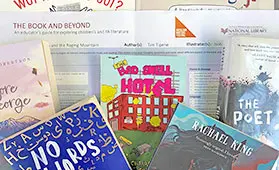

Schools and home educators can borrow from our extensive collections of fiction and non-fiction books to inspire and inform your students’ inquiry and develop their love of reading.